
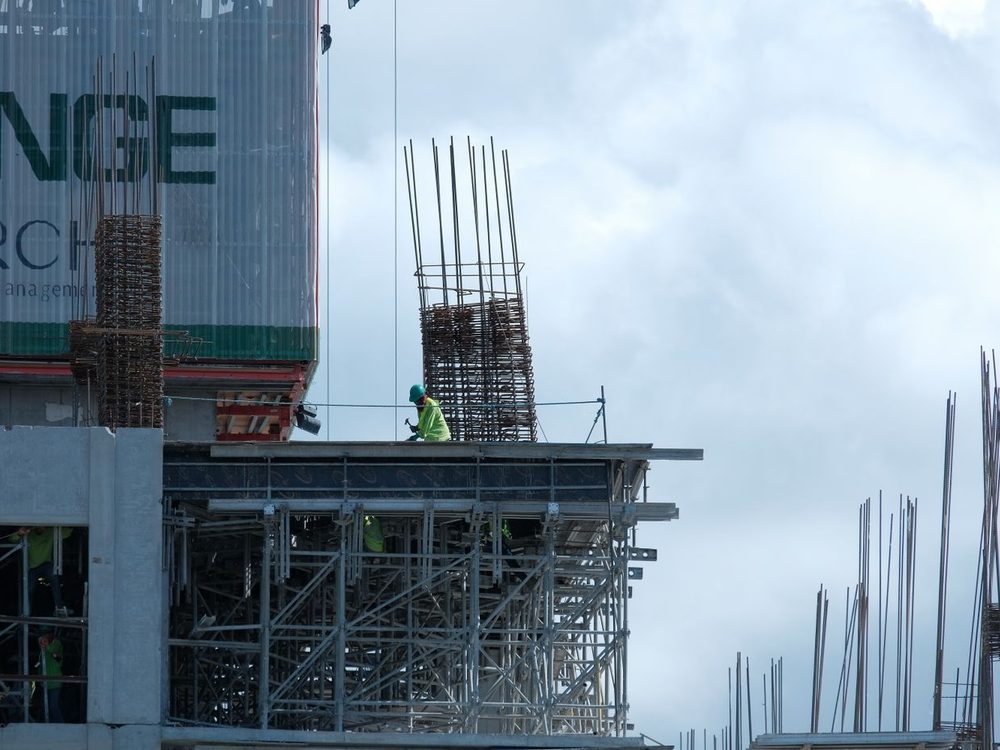
Any construction programme in this country that ignores the weather is fiction. Tropical cyclones run roughly from June through November, with the heaviest of it usually between July and October.
The cost is not only the days nobody can work. It is wider than that. The wet season reaches into almost every trade, and a schedule that assumes otherwise slips quietly until the slip is too large to hide.
What the rain actually stops
Excavations flood. They have to be dewatered before anything can be placed. Concrete poured into standing water is not concrete you want under your house. No schedule pressure makes that acceptable.
Masonry, plaster and paint all need surfaces dry enough to bond. In high humidity that takes longer than the datasheet suggests. Rush it and the finish fails in its first year.
Wind stops roofing. It stops any other work at height too. That is a safety call. It is not negotiable, whatever the programme says.
Sequence around it rather than hope
The practical answer is to load the work by season, so the trades that cannot tolerate water are finished before the water arrives. Groundworks and the structural frame go into the drier months wherever the start date allows, so the building is closed against weather before the worst of it arrives.
Once there is a roof, the wet months can carry interior work: rough-ins, plastering under cover, tiling, joinery and painting. A building that is watertight by June is a building that keeps progressing through September.
Ask to see the weather allowance
Every honest Philippine programme contains an allowance for weather. The question is whether you can see it.
An allowance buried inside optimistic durations looks like a faster build on paper and produces an argument later. An allowance shown as its own line is a contractor telling you what they actually expect, which is the only version you can plan around.
Batangas has a second consideration
Around Lipa City and the wider Batangas province, rain is not the only thing that falls. Taal is active. Ashfall reaches the area periodically, and it is not a rare event.
Ash is abrasive. It is also heavy once it is wet, which is when it does the damage. It loads roofs, blocks gutters and downspouts, and gets into anything with a moving part. Agree in advance who covers exposed materials and who clears roofs. Finding out mid-build that nobody planned for it is the expensive version.
The honest version
Weather will move some dates. That is not a failure of planning. A programme that admits it and shows you where is more reliable than one promising a finish date it cannot control.
What a contractor can control is being on site when work is possible, and telling you the same week when something slips rather than a month later.